Corner Stone Town Planning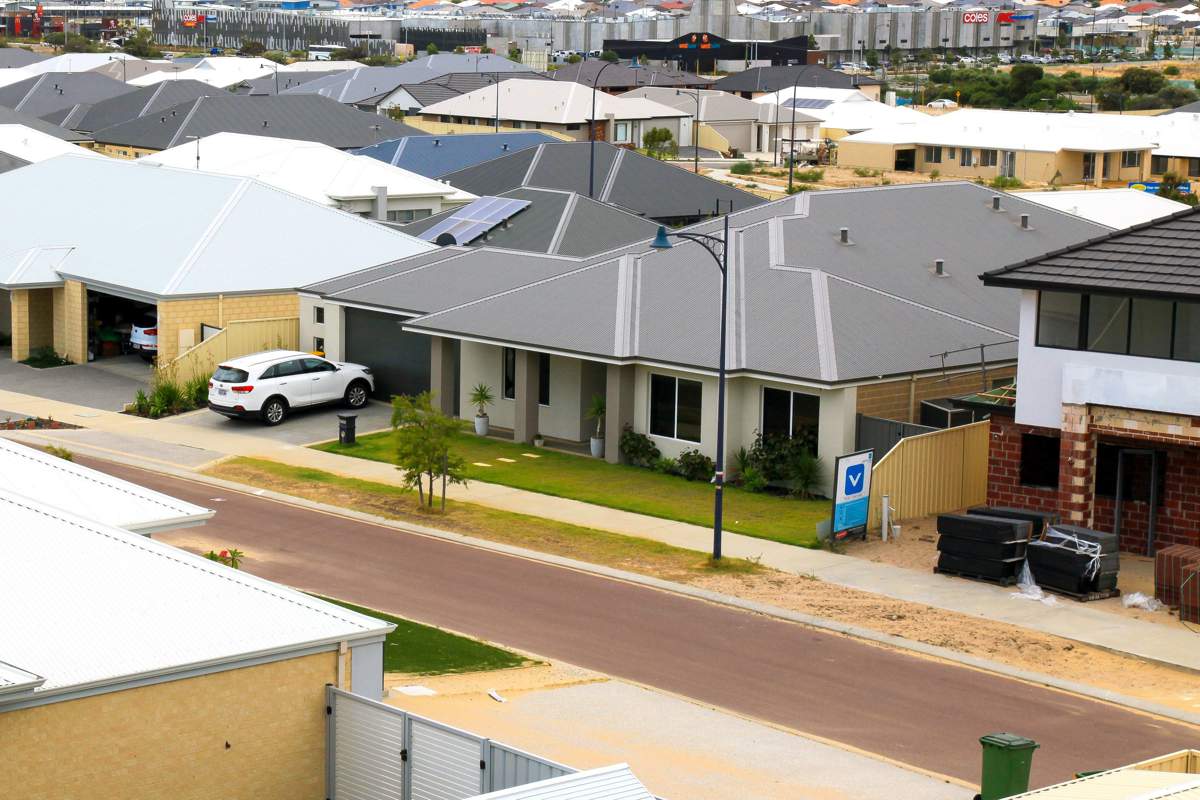
The Residential Design Codes (R-Codes) provide design provisions for residential development across Western Australia. The purpose of the R-Codes is to provide a comprehensive basis for the guidance and control of residential development.
There are two volumes of the R-Codes being Volume 1 which applies to Single Houses, Grouped Dwelling and Multiple Dwellings (including dwellings in mixed use development) with a residential density below R 60.
Volume 2 applies to Multiple Dwellings (apartments) within an R – Code of R 80 and above (including the residential component of mixed-use development).
For this blog we will focus on the R-Codes Volume 1.
Where do the R-Codes apply
The R-Codes apply to all residential development throughout Western Australia.
R-Codes Volume 1 Structure
The R-Codes Volume 1 is divided into, Parts A to D and Appendices.
Part A sets out the operation of the R-Codes. Part B applies to all single houses R 40 and below, Grouped Dwellings R 25 and below, and Multiple Dwellings in areas coded R 10-R 25.
Part C applies to all Single Houses R 50 and above R 100 SL and R-AC, Grouped Dwellings in areas coded R 30 and above, R 100 SL and R-AC and Multiple Dwellings in areas coded R 30 to R 60. Finally, Part D applies to Single Houses and Grouped Dwellings (all density codings), and Multiple Dwellings in areas coded R 10 to R 60 setting out site area requirements.
How the R-Codes Apply
The type of development and R-Code that applies will determine whether the provisions of Part B or C will apply.
Once you have determined which provisions of the R-Codes apply it is then a matter of reviewing the proposal against the relevant requirements. The Department of Planning, Lands and Heritage provide assessment templates. Explanatory Guidelines and Practice Notes are also available.
Deemed to Comply and Design Principles Pathways
The R-Codes Volume 1 provides for an outcome based approach with two pathways to approval.
Applications for development approval are required to demonstrate that the proposal achieves the objectives of the R-Codes and the requirement of each design element.
The objectives and requirements of each design element can be achieved via a deemed to comply pathway. If deemed to comply provisions are met the objectives and design principles of the R-Codes are satisfied.
The alternate to the deemed to comply pathway is an assessment against the design principles. The design principles approach offers a merit-based assessment when one or more design principles cannot be met.
Where a development does not meet a deemed to comply provision an assessment against the relevant design principle is required. Where a development does not meet a deemed to comply provision this is often referred to as a ‘variation’.
When seeking a design principle assessment, it is necessary to provide justification to demonstrate how development meets the design principle.
Landowner Consultation
Where a development requires assessment against a design principle, and a decision maker is of the view that owners and occupiers are likely to be adversely affected the owners / occupiers will be invited to comment on the proposal.
The decision maker is to consider comments received, and technical considerations when determining whether the proposal should be approved. A copy of the comments received as part of consultation can be provided to the proponent on request. The proponent then can provide a response to submissions to the decision maker.
R-Codes and Subdivision
The R-Code that applies determines the minimum site area per dwelling.
Table D Site Area Requirements of the R-Codes Volume 1 sets out minimum site areas that apply under Part B and Part C. Different minimum site areas apply to Single Houses or Grouped Dwellings and Multiple Dwellings. The minimum site areas for Multiple Dwellings in the R-Codes Volume 1 only apply to areas coded between R 10 and R 60.
Subdivision applications for residential development are required to meet the site area requirement of the R-Codes.
As an example, for an area with a density code of R 20 a Single House or Grouped Dwelling require a minimum and average site area of 350m2 and 450m2 respectively. A ‘battleaxe’ lot requires a minimum lot area of 450m2. For a Multiple Dwelling an average site area per dwelling of 450m2 is applicable. Minimum frontage also applies for Single Houses and Grouped Dwellings.
Other planning instruments and the R-Codes
A Local Planning Scheme can modify the R-Codes relevant to local development requirements. As such when considering residential development, it is necessary to check the Local Planning Scheme.
A Precinct Structure plan may amend, replace and/or augment any deemed to comply provision of the R-Codes, and provide additional requirements for residential development in order the achieve the objectives and outcomes of State Planning Policy 7.2 Precinct Design.
A Local Government may also adopt a Local Planning Policy (LPP) that amends, replaces and/or augments the deemed to comply provisions of the R-Codes. Some provisions of the R-Codes Volume 1 may be modified without the approval of the Western Australian Planning Commission (WAPC), and in some circumstances approval of the WAPC is required.
Finally, a Local Government may adopt a Local Development Plan (LDP) that amends, replaces and/or augments a deemed-to-comply provision of the R-Codes. Some modifications as part of an LDP will require the approval of the WAPC.
Key take aways
The R-Codes Volume 1 is the primary control for residential development within Western Australia. However, there are other controls set out in Local Planning Schemes or Local Planning Policies that can modify the requirements of the R-Codes. Thus, it is important when considering a residential development that you review not only the requirements of the R-Codes but other related planning documents.
Whether you require a pre-lodgment assessment of your proposal or design principle assessment Cornerstone Town Planning are ready to help.
Disclaimer – the information contained above does not constitute planning advice, and is of a general nature. You should obtain town planning advice relevant to your specific circumstances. In that regard please do not hesitate to contact Cornerstone Town Planning.